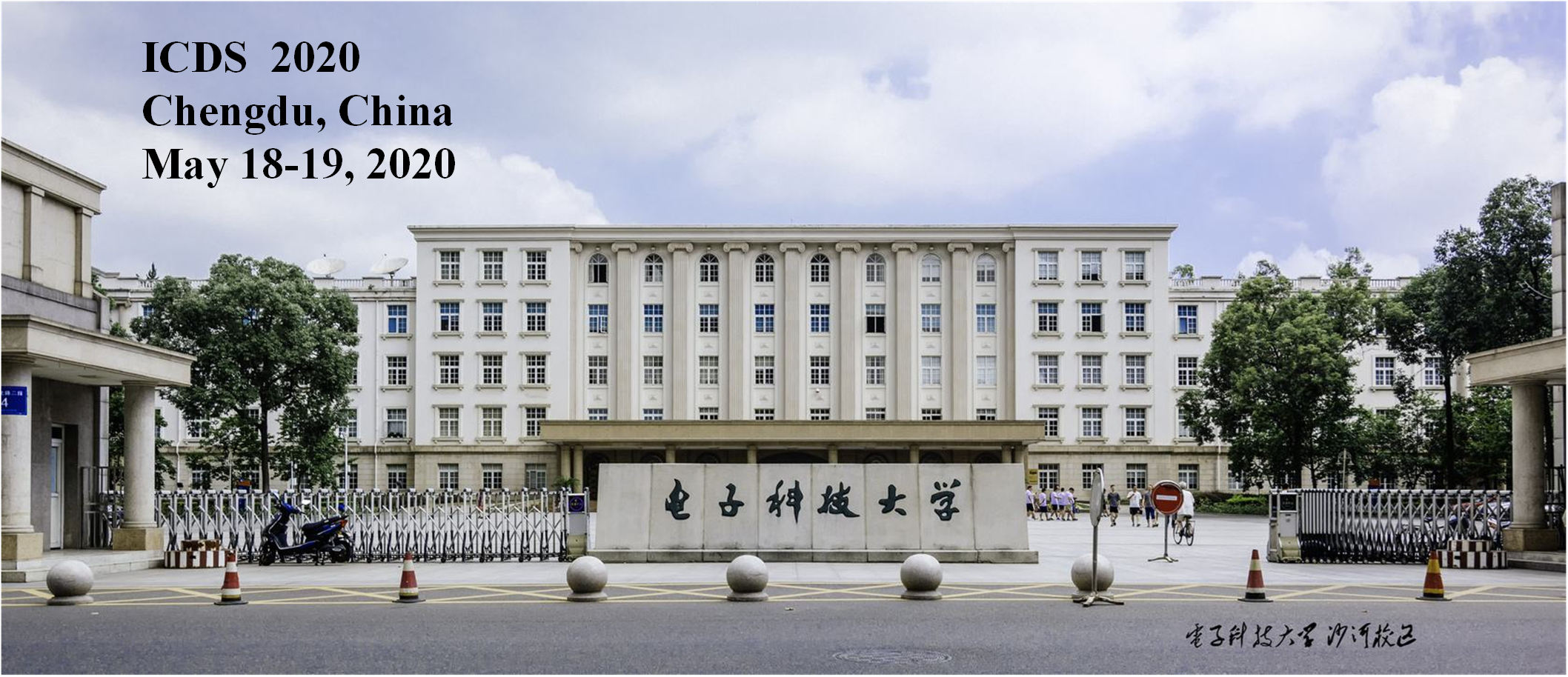
ICDS 2020 - Chengdu, Sichuan, China

"Data Security and Intelligent Applications"

The explosion of digital data created by mobile sensors, social media, surveillance, medical imaging, smart grids and the like-combined with new tools for analyzing it all-has brought us a Big Data era. We are facing the great challenges: how to deal with data which is more than we could actually understand and absorb and how to make efficient use of the huge volume of data? From both scientific and practical perspectives, research on "Data Science" goes beyond the contents of Big Data. Data Science can be generally regarded as an interdisciplinary field of using mathematics, statistics, databases, data mining, high-performance computing, knowledge management and virtualization to discover knowledge from data. It should have its own scientific contents, such as axioms, laws and rules, which are fundamentally important for experts in different fields to explore their own interests from data. A Blockchain is a secured, shared and distributed ledger that facilitates the process of recording and tracking resources without the need of a centralized trusted authority. The technology is scalable and robust and all participant nodes provide resources in a fair manner, which alleviates many-to-one traffic flow bottlenecks.


The "International symposium/workshop on Dataology and Data Science" has been a platform for researchers from data and some practitioners from industry and government to share their ideas, research results and experiences on studying of data. From 2010 to 2013, it has been annually held in China where more than 300 scholars and industrial professionals from Australia, Canada, China, Japan, UK and USA attended.


Started from 2014, this platform has been transferred as the annual International Conference on Data Science (ICDS) in order to further expand the preliminary findings and exchanges on Data Science. The last ICDS series were held at Beijing, China (ICDS 2014), Sydney, Australia (ICDS 2015), Xian, China (ICDS 2016), Shanghai, China (ICDS 2017), Beijing, China (ICDS 2018), Ningbo, China (ICDS 2019). ICDS 2020 will be held at Chengdu, China in Dec 26-27, 2020. Its theme will be: "Advancement of Data Science and Blockchain". The main topics, but not limited to, are as follows:


  • Theory of Data Science
  • Data Science of People
  • Web of Data
  • Data Science of Trust
  • Data Science of Health
  • Internet of Things
  • Blockchain theories and algorithms for Data Science
  • Blockchain architectures, protocols and algorithms
  • Blockchain based security, privacy, and trust
  • Network and computing optimization in blockchains
  • Decentralization optimization in blockchain
  • Scalable consensus algorithms
  • Lightweight blockchain designs
  • Innovative applications and research in blockchain
  • Blockchain in information-centric networking
  • Blockchain in smart grid
  • Blockchain in artificial intelligence
  • Blockchain in networking and edge/fog/cloud technologies
  • Blockchain in e-health
  • Blockchain in 5G technologies
  • Blockchain in 5G technologies
  • Blockchain in decentralized financing and payments
  • Blockchain in social networking
  • Blockchain in agriculture
  • Blockchain in autonomous vehicles
  • Blockchain in mobile cellular networks
  • Blockchain standardization
  • Blockchain tools, simulators and test-bed
  • Private blockchain systems
  • Decentralized storage in blockchain
  • Security, privacy, and trust of blockchain and distributed ledger technologies
  • Secure smart contracts
  • Consensus mechanisms

  • We will invite well-known international scholars and professionals in various related fields, both natural and social sciences, to join us for the development of Data Science at this conference and so on to fully explore methodologies on Data Science from different research aspects.

    Keynotes

    Melbourne

    Title: Objective-Domain Dual Decomposition: An Effective Approach to Optimizing Partially Differentiable Objective Functions
    Abstract: This paper addresses a class of optimization problems in which either part of the objective function is differentiable while the rest is nondifferentiable or the objective function is differentiable in only part of the domain. Accordingly, we propose a dual-decomposition-based approach that includes both objective decomposition and domain decomposition. In the former, the original objective function is decomposed into several relatively simple subobjectives to isolate the nondifferentiable part of the objective function, and the problem is consequently formulated as a multiobjective optimization problem (MOP). In the latter decomposition, we decompose the domain into two subdomains, that is, the differentiable and nondifferentiable domains, to isolate the nondifferentiable domain of the nondifferentiable subobjective. Subsequently, the problem can be optimized with different schemes in the different subdomains. We propose a population-based optimization algorithm, called the simulated water-stream algorithm (SWA), for solving this MOP. The SWA is inspired by the natural phenomenon of water streams moving toward a basin, which is analogous to the process of searching for the minimal solutions of an optimization problem. The proposed SWA combines the deterministic search and heuristic search in a single framework. Experiments show that the SWA yields promising results compared with its existing counterparts.


    Melbourne

    Title: Workload Scheduling in Data Centers with Performance Guarantee
    Abstract: Driven by the booming demands of applications, advanced computing in cloud data centers is evolving to be a major paradigm of high-performance computing for data processing and analysis. A data center is composed of a massive number of servers connected by an interconnection network, and multiple geographically dispersed data centers are connected by a dedicated center network of ultra-high bandwidth. Access to data centers from office and personal computing devices is provided through an edge network in a cloud environment that supports ubiquitous on-demand submission of client jobs in addition to data collection, local processing and outsourcing. Workload scheduling in cloud data centers is critical for improving the service capability of the data centers in terms of reducing operation cost and increasing profit. This talk addresses workload scheduling in cloud data centers for minimizing operation cost and maximizing profit in the levels of data center and server respectively. I will first overview some recent developments in high-performance computing in data centers. Then, I will discuss workload scheduling in the data center level with the focus on minimizing energy cost which is the dominating factor in a data center's operation cost, and show our recent work on workload scheduling with performance guarantee in data centers with multi-source energy supply under the given green degree constraint (carbon emission cap) for environment protection. Next, I will move down to the sever level and present our work on solving the bounded flexible scheduling problem with performance guarantee to schedule workloads with bounded deadlines and parallelism degrees on a given set of data center servers. Finally I will conclude the talk by showing some of our on-going projects and future work in this direction.


    Melbourne

    Title: Interactive Deep Metric Learning
    Abstract: The embedding-based data mining is to transform the raw data into useful information that is easy to consume by the downstream tasks, such as classification, predictive analysis, and clustering. The embedding function is traditionally dominated by various pattern mining algorithms and is recently driven by the deep learning-based embedding technique. In this talk, I will briefly introduce our recent data mining practices on the application domain of big healthcare data, specifically Interactive Deep Metric Learning.


    Melbourne

    Title:Cost Effective Data Placement in the Cloud for Efficient Data Access of Online Social Networks
    Abstract: Online social networks are organised around users who have certain expectations from their network provider, such as low latency access to both their own data and their friends’ data, often very large, e.g. videos, pictures etc. Replication of data can be used to meet these requirements and geo-distributed cloud services with virtually unlimited capabilities are suitable for large scale data storage. However, social network service providers often have a limited monetary capital to store every piece of data everywhere to minimise users’ data access latency. Therefore, it is crucial to have optimised data placement to fulfil the users’ acceptable latency requirement while having the minimum cost for social network providers. In this seminar, we address key problems including how to find the optimal number of replicas, how to optimally place the datasets and how to distribute the requests to different datacentres.


    Melbourne

    Title:Highest algorithm for linear program
    Abstract: The idea of the talk is based on Wang/s Cone cutting theory, which yields a group of special techniques. Combining the highest principle with those algorithms, we are expected to build the strong polynomial algorithms.


    Melbourne

    Title:Is NP=P? A Polynomial-time solution for finite graph isomorphism
    Abstract: This talk will introduce a polynomial-time solution for finite graph isomorphism. It targets to provide a solution for one of the seven-millennium problems: NP versus P. Three new representation methods of a graph as vertex/edge adjacency matrix and triple tuple are proposed. A duality of edge and vertex and a reflexivity between vertex adjacency matrix and edge adjacency matrix were first introduced to present the core idea. Beyond this, the mathematical approval is based on an equivalence between permutation and bijection. Because only addition and multiplication operations satisfy the commutative law, we proposed a permutation theorem to check fast whether one of two sets of arrays is a permutation of another or not. The permutation theorem was mathematically approved by Integer Factorization Theory, Pythagorean Triples Theorem and Fundamental Theorem of Arithmetic. For each of two n-ary arrays, the linear and squared sums of elements were respectively calculated to produce the results.


    Melbourne

    Title:Broad Learning: A New Perspective on Mining Big Data
    Abstract: In the era of big data, there are abundant of data available across many different data sources in various formats. “Broad Learning” is a new type of learning task, which focuses on fusing multiple large-scale information sources of diverse varieties together and carrying out synergistic data mining tasks across these fused sources in one unified analytic. Great challenges exist on “Broad Learning” for the effective fusion of relevant knowledge across different data sources, which depend upon not only the relatedness of these data sources, but also the target application problem. In this talk we examine how to fuse heterogeneous information to improve mining effectiveness over various applications, including social network, recommendation, malware detection, etc.


    Melbourne

    Title:COVID-19 – Lessons learnt from COVID-19 and the new normal as I see it
    Abstract: Indeed, pandemics are silent killers. As one author described it, these viruses are the tiniest and primitive creatures, invisible to the naked eye form of life, which have the world under his control. Humans no longer are the masters of the world. The virus has the world in his grip and we all struggle to survive. However, plagues, major outbreaks and pandemics are of all times and probably have killed more people than all previous wars together. We often remember wars, not pandemics. Hence, we have forgotten to be prepared for pandemics; governments lack to have a plan ready to be prepared for the next epidemic. We now see that the US, India, Brazil, Russia and Argentina have topped the 1 million mark of positive cases, with many other countries following soon in their steps. And these figures are for sure an underreporting of the reality, with second waves showing we’re far from controlling the virus.


    Melbourne

    Title:How to deal with COVID-19 by using Data Analysis
    Abstract: To determine the right timing for resuming work and life, the talk first provides a retrospective analysis of COVID-19 to gain an in-depth understanding of age-specific contact-based disease transmission. This is followed then by a promising analysis of different work resumption plans to assess not only the respective economic implications of the plans, but most importantly, the associated disease transmission risks. The key to the method of COVID-19 transmission pattern characterization lies in modeling the interactions among people. Specifically, this talk considers four representative settings of social contacts that may cause the disease spread: (1) households; (2) schools; (3) workplaces; and (4) public places. It develops a computational method to measure the contact intensity between different age groups in those social settings. With such an in-depth characterization of social contact-based transmission, it is possible to analyze and explain the ins and outs of the COVID-19 outbreak, including the past and future risks, intervention effectiveness, and corresponding risks of restoring social activities.


    Melbourne

    Title:Threats and Defenses in Data Security Games
    Abstract: One of the main threats to data security is the Advanced Persistent Threat (APT) attack. An APT attacker is a stealthy threat actor which gains unauthorized access to a computer network and remains undetected for an extended period, so as to gain unauthorized data access and data corruption throughout the data lifecycle. It has five stages: reconnaissance, establish foothold, lateral movement, exfiltration, and post-exfiltration. In this talk, we discuss the use of game theory-based deception technology to defend against APT attacks. After some introduction of data security and major threats, we focus on the following two case studies: The first case study is a countermeasure against reconnaissance, where we introduce differential privacy into a deception game. By using differential privacy, the attacker cannot deduce the real configuration of each system. The second case study is a countermeasure against lateral movement, where we develop an effective repair strategy for an organization using differential game theory. Our findings help to better understand and effectively defend against APT. The talk is based on the following two recently published papers in our group:

  • Dayong Ye, Tianqing Zhu, Sheng Shen, Wanlei Zhou: "A Differentially Private Game Theoretic Approach for Deceiving Cyber Adversaries". IEEE Transactions on Information Forensics and Security. 16: 569-584 (2021).
  • Lu-Xing Yang, Pengdeng Li, Yushu Zhang, Xiaofan Yang, Yong Xiang, Wanlei Zhou: "Effective Repair Strategy Against Advanced Persistent Threat: A Differential Game Approach". IEEE Transactions on Information Forensics and Security. 14(7): 1713-1728 (2019).

  • Conference Organizing Committees

    1. Organizers and Sponsors:

  • University of Electronic Science and Technology of China, China
  • Research Lab of Algorithm and Chips, Swinburne University of Technology, Australia
  • Key Lab of Data Mining and Knowledge Management, the Chinese Academy of Sciences, China
  • Shanghai Key Laboratory of Data Science, Fudan University, China
  • School of Management, Xi'an Jiaotong University, China
  • Jiangsu Provincial Key Laboratory of E-business, Nanjing University of Finance and Economics, China
  • Jingqi Network (Stock ID: 837606), China
  • PIESAT, China
  • Tonghe Cloud Pty Ltd, China
  • Springer
  • International Soceity of Blockchain
  • International Soceity of Algorithms and Chips
  • 2. General Chair:

  • Shijie Zhou (University of Electronic Science and Technology of China, China)
  • Yong Shi (Chinese Academy of Sciences, China)
  • 3. Advisor Chair:

  • Shouyang Wang (Academy of Mathematics and System Science, China)
  • Guirong Guo (National University of Defense Technology, China)
  • Ruwei Dai (Institute of Automation,Chinese Academy of Sciences, China)
  • Yueliang Wu (University of Chinese Academy of Sciences, China)
  • Zhiming Ma (Academy of Mathematics and System Science, China)
  • Zongben Xu (Xi'an Jiaotong University, China)
  • Xingui He (Peking University, China)
  • Shanlin Yang (HeFei University of Technology, China)
  • Jing Chen (general staff 57 institute, China)
  • Yaxiang Yuan (Academy of Mathematics and System Science, China)
  • Wei Wang (China Aerospace Science and Technology Corporation, China)
  • Peizhuang Wang (Liaoning University of Technology, China)
  • Hongli Zhang (Industrial and Commercial Bank of China, China)
  • Zheng Hu (China Financial Futures Exchange, China)
  • Gang Yu
  • Yachen Lin (VIP Shop, China)
  • James Tien (University of Miami, American)
  • Philip S. Yu (University of Illinois, American)
  • Xiaojun Chen (The Hong Kong Polytechnic University, China)
  • 4. Steering Committee Co-Chairs:

  • Philip S. Yu (University of Illinois at Chicago, USA)
  • Yong Shi (Chinese Academy of Sciences, China)
  • Yangyong Zhu (Fudan University, China)
  • Chengqi Zhang (University of Technology Sydney, Australia)
  • Wei Huang (Xi'an Jiaotong University, China)
  • Yun Xiong (Fudan University, China)
  • 5. Members:

  • Vassil Alexandrov (ICREA-Barcelona Supercomputing Centre, Barcelona, Spain)
  • Guoqing Chen (Tsinghua University, China)
  • Xueqi Chen (Chinese Academy of Sciences, China)
  • Jichang Dong University of Chinese Academy of Sciences, China)
  • Tiande Guo (Academy of Mathematics and System Science, China)
  • Lihua Huang (Fudan University, China)
  • Qingming Huang (Institute of Computing Technology, China)
  • Xiaohui Liu (Brunel University, United Kingdom)
  • Feicheng Ma (Wuhan University, China)
  • Jiye Mao (Renmin University, China)
  • Hugo Terashima Marín (Tecnológico de Monterrey, Mexico)
  • Ricardo Ambrocio Ramírez Mendoza (Tecnológico de Monterrey, Mexico)
  • Andrew Rau-Chaplin (Dalhousie University, Canada)
  • Milan Zeleny (ZET Foundation and Tomas Bata University, Czech)
  • Xiaojuan Zhang (Wuhan University, China)
  • Ning Zhong (Maebashi Institute of Technology, Japan)
  • 6. Program Co-Chairs:

  • Yong Shi (Chinese Academy of Sciences, China)
  • Jing He (Swinburne University of Technology, Australia)
  • Chengqi Zhang (University of Technology Sydney (UTS), Australia)
  • 7. Publication Chairs:

  • Fagen Li (University of Electronic Science and Technology of China, China)
  • Yongjian Liao (University of Electronic Science and Technology of China, China)
  • Yuyu Wang (University of Electronic Science and Technology of China, China)
  • Hu Xiong (University of Electronic Science and Technology of China, China)
  • Guangyan Huang (Deakin University, Australia)
  • Wenshuai Wu (Sun Yat-sen University, China)
  • 8. Program Committee:

  • Fagen Li, University of Electronic Science and Technology of China, China
  • Hu Xiong, University of Electronic Science and Technology of China, China
  • Masayuki Tezuka, Tokyo Institute of Technology, Japan
  • Yongjian Liao, University of Electronic Science and Technology of China, China
  • Yuntao Wang, The University of Tokyo, Japan
  • Yuyu Wang, University of Electronic Science and Technology of China, China
  • Iván Mauricio Amaya-Contreras, Tecnológico de Monterrey,Mexico
  • Marco Xaver Bornschlegl, University of Hagen, Germany
  • Zhengxin Chen, University of Nebraska at Omaha, USA
  • Zhiyuan Chen, University of Maryland Baltimore County, USA
  • Santiago E. Conant-Pablos, Tecnológico de Monterrey,Mexico
  • Felix Engel, University of Hagen, Germany
  • Ziqi Fan, University of Minnesota, USA
  • Weiguo Gao, Fudan University, China
  • Xiaofeng Gao, Shanghai Jiao Tong University, China
  • Kun Guo, Chinese Academy of Sciences, China
  • Andrés Eduardo Gutiérrez-Rodríguez, Tecnológico de Monterrey,Mexico
  • Jing He, Swinburne University of Technology, Australia
  • Matthias Hemmje, University of Hagen, Germany
  • Gang Kou, University of Electronic Science and Technology of China
  • Aihua Li, Central University of Finance & Economics, China
  • Jianping Li, Chinese Academy of Sciences, China
  • Shanshan Li, National University of Defense Technology, China
  • Xingsen Li, NIT, Zhejiang University, China
  • Charles X. Ling, University of Western Ontario, Canada
  • Xiaohui Liu, Brunel University London, United Kingdom
  • Wen Long, Chinese Academy of Sciences, China
  • Ping Ma, University of Georgia, USA
  • Stan Matwin, Dalhousie University, Canada
  • Evangelos Milios, Dalhousie University, Canada
  • Raúl Monroy-Borja, Tecnológico de Monterrey,Mexico
  • Lingfeng Niu, Chinese Academy of Sciences, China
  • Shaoliang Peng, National University of Defense Technology, China
  • José Carlos Ortiz-Bayliss,Tecnológico de Monterrey,Mexico
  • Yi Peng, University of Electronic Science and Technology of China
  • Zhiquan Qi, Chinese Academy of Sciences, China
  • Alejandro Rosales-Pérez, Tecnológico de Monterrey,Mexico
  • Xin Tian, Chinese Academy of Sciences, China
  • Yingjie Tian, Chinese Academy of Sciences, China
  • Luís Torgo, University of Porto, Portugal
  • Shengli Sun, Peking University, China
  • Zhenyuan Wang, University of Nebraska at Omaha, USA
  • Xianhua Wei, Chinese Academy of Sciences, China
  • Dengsheng Wu, Chinese Academy of Sciences, China
  • Hui Xiong, Rutgers, the State University of New Jersey, USA
  • Jeffrey Xu Yu, the Chinese University of Hong Kong
  • Lingling Zhang, Chinese Academy of Sciences, China
  • Yanchun Zhang, Victoria University, Australia
  • Ning Zhong, Maebashi Institute of Technology, Japan
  • Xiaofei Zhou, Chinese Academy of Sciences, China
  • Xinquan Zhu, Florida Atlantic University, USA
  • Jinjun Chen, Swinburne University of Technology, Australia
  • Call for Paper

    ICDS 2020 will be held at Chengdu, China in Dec 26-27, 2020. Its theme will be: " Data Security and Intelligent Applications ". The main topics, but not limited to, are as follows:

  • Data security and protection
  • Information steganography
    digital signature
    Data encryption algorithm
    Data transmission protocols and algorithms
    Adversarial sample algorithm
    Data security and protection basic theory and technology
    Data collection and data release
    Data analysis and data mining
    Cloud computing data security
    Data security and protection in mobile networks
    Data security and protection in social networks
    Data Security and Protection in the Internet of Things

  • Key technologies of artificial intelligence
  • Natural language processing
    Social network analysis
    Speech Recognition
    Image Identification
    Reinforcement learning
    Machine learning platform
    Decision management
    Human Feature Recognition Technology
    smart robot

  • Artificial intelligence security applications
  • Intrusion detection
    abnormal detection
    Network Security Situation Awareness
    Intelligent firewall system
    Malicious code detection

  • Big Data
  • Big data security
    Big data collection and preprocessing
    Big data computing model
    Big data analysis and mining
    Big data visualization analysis

  • Blockchain security applications
  • Consensus mechanism and performance
    Cross-chain mechanism
    Blockchain governance mechanism
    Identity management
    Privacy protection in the blockchain
    Smart contracts and self-organizing business models

  • IoT security
  • Research on Sensor Security Technology
    Information Security in the Internet of Things
    Encryption in the Internet of Things
    IoT application security
    Secure routing protocol
    Authentication and access control in the Internet of Things

  • Cryptography
  • Public-key provably secure cryptography
    Cryptographic primitives
    Cryptographic protocols
    Post quantum cryptography
    Cryptanalysis


    The Program Chairs are soliciting contributed technical papers for presentation at the Conference and publication in the Conference Proceedings by Springer CCIS (Pending). The ICDS 2019 paper was published via Jing He, Philip S. Yu, Yong Shi, Xingsen Li, Zhijun Xie, Guangyan Huang, Jie Cao, Peng Zhang, Pu Xiao, The Six International Conference, ICDS 2019, Ningbo, China, Springer CCIS, ISBN 978-981-15-2810-1, May 17-20, 2019 (EI indexed, https://www.springer.com/gp/book/9789811528095)

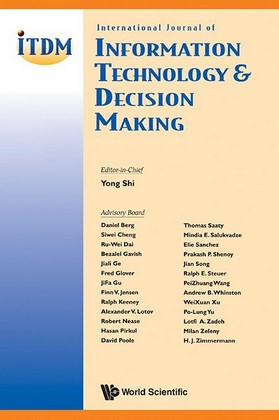
    Selected high quality papers will be published in the special issues of two journals, one is Concurrency and Computation Practice and Experience (CCPE, Wiley) and the other is International Journal of Information Technology and Decision Making.

    Conference paper submissions are encouraged before the next deadlines:

  • Paper and Proposed Submission Deadline 5 Dec. 2020
  • Acceptance notification 1 Dec. 2020
  • Registration deadline 15 Dec. 2020
  • Invitation for Special Issue Submissions

    1. Instructions for ICDS 2020 Special Issue at Concurrency and Computation Practice and Experience


    http://www.cc-pe.net/journalinfo/index.html
    This issue is for the accepted papers with ICDS 2020 only. The invitation will be send off after the conference paper was published by LNCS 9208. The minimum extension is 60%. “ICDS 2020” must be remarked in the manuscript.

    Guest editors:

  • Prof. Jie Cao, Nanjing University of Finance and Economics, China, Email: caojie690929@163.com
  • Prof. Yong Shi, University of Chinese Academy of Sciences. Email: yshi@ucas.ac.cn
  • Prof. Philips Yu, University of Illinois at Chicago, U. S. A. email: psyu@uic.edu
  • Prof. Jing He, Swinburne University of Technology, Australia, email: lotusjing@gmail.com

  • 2. Instructions for ICDS 2020 Special Issue at International Journal of Information Technology and Decision Making


    https://www.worldscientific.com/worldscinet/ijitdm
    This issue is for the accepted papers with ICDS 2020 and the open submission within the area of data science and smart city. The acceptance rate is around 10%. The minimum extension is 60% based on icds 2020 conference paper and the average length of IJITDM accepted paper is 20 pages.

    Guest editors:

  • Prof. Yimu Ji, Nanjing University of Posts and Communications, China, email: jiym@njupt.edu.cn
  • Prof. Jing He, Swinburne University of Technology, Australia, email: lotusjing@gmail.com
  • Paper Submission

    Authors are encouraged to submit high-quality, original work that has neither appeared in, nor is under consideration by, other conference/journals.

    Springer offers authors, editors and reviewers of Peer-to-Peer Networking and Applications a web-enabled online manuscript submission and review system. Our online system offers authors the ability to track the review process of their manuscript. This online system offers easy and straightforward log-in and submission procedures, and supports a wide range of submission file formats. Manuscript should be submitted to: https://easychair.org/conferences/?conf=icds2020

    Conference Registration

    Registration Deadlines: Dec. 12, 2020

    REGISTRATION FEE
    Please remark your PAPER ID (submission number in the EasyChair System) when making payment. Contact: icds.conference@gmail.com


    Type Fee
    Regular Participants $250 USD/RMB 1500
    The submitted paper should be limited to 8 pages. The authors can extend a maximum of 2 pages for each paper each extra page $100 USD /RMB 650
    1. Payment by Chinese RMB via Bank Transfer
    单位:四川通和云网科技有限公司
    开户银行:中国农业银行股份有限公司成都金融城支行
    账号:22808301040014033
    行号:103651080839
    税号:91510100MA68L38Y7X
    注册地址:中国(四川)自由贸易试验区成都天府新区正兴街道湖畔路北段366号1栋3楼1号
    收件地址:成都市高新区天府大道1480号9号楼3栋5层18号
    2. Payment by U,S Dollars via Bank Transfer
    Account Name Big Networks PTY LTD
    BSB 063240
    Account Number 10749948
    Bank Name Commonwealth Bank, Australia
    SWIFT CODE CTBAAU2S
    Bank Address 1091 Mt Alexander Rd, Essendon North VIC 3041
    Company Address 326/367 Burwood Road, Hawthorn, VIC 3122, Australia
    3. Payment by paypal
    jiecaonjue@gmail.com

    Please use the following links to join the online meeting (Live-stream Keynotes)
    2020/12/26
    Meeting Link: 08:30-17:00: https://meeting.tencent.com/l/sYzWoeNYw9ln
    Passcode: 202012
    2020/12/27
    Meeting Link: 08:30-17:00: https://meeting.tencent.com/l/h4jstsJDE23D
    Passcode: 202012